
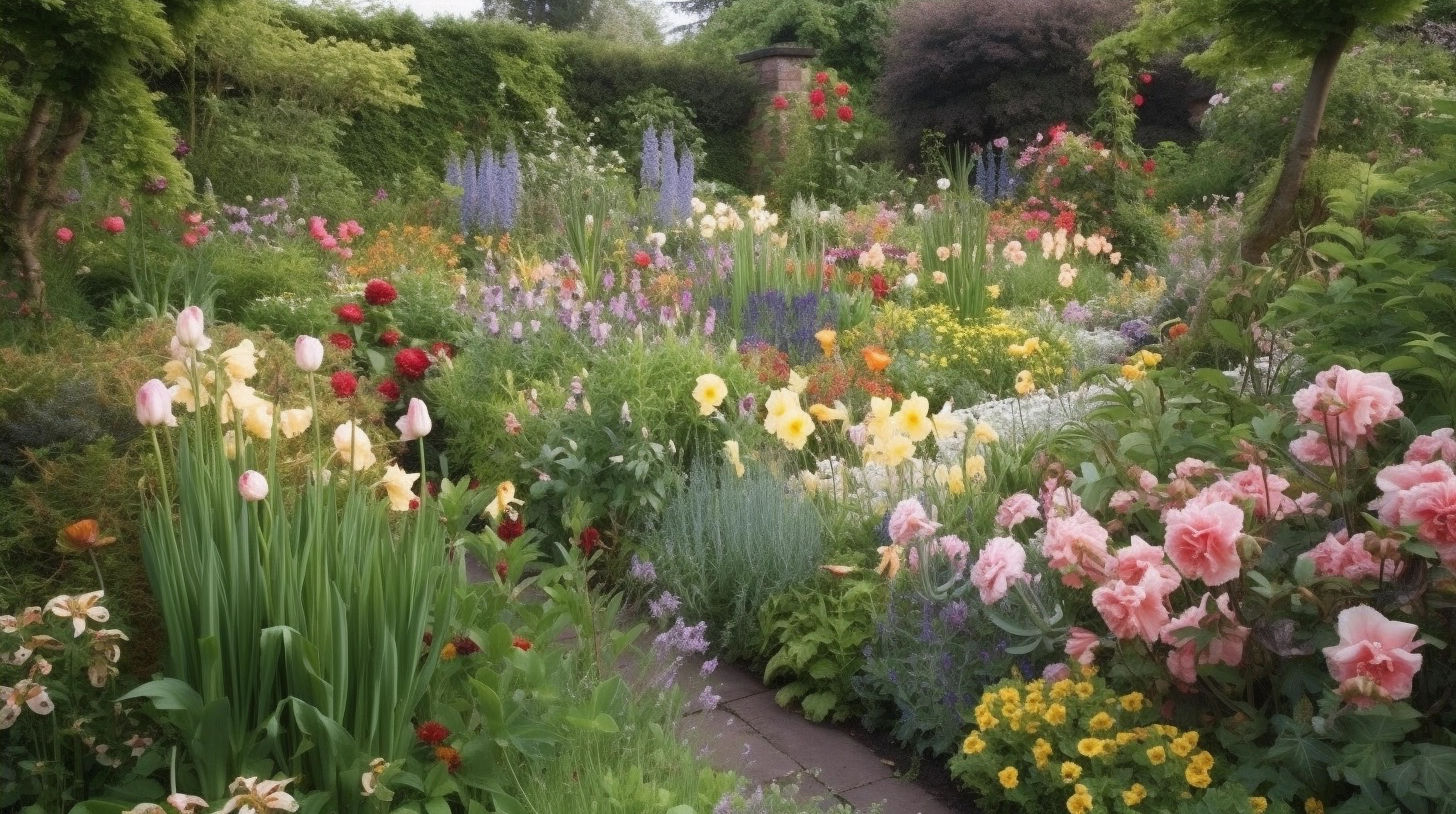
A Mary garden is a small corner of your yard set aside for the Blessed Mother, planted with flowers that have long been connected to her and usually anchored by a statue. It gives you a quiet place to pray, and it turns an ordinary flower bed into something that points to heaven. The tradition is older than most people realize, and it is one of the easiest ways to bring your faith outdoors.
You do not need a green thumb or a big budget to start one. A single statue and a few well-chosen plants are enough. Here is where the custom comes from, which flowers to plant and what they mean, and how to put it all together.
What is a Mary garden?
A Mary garden is a garden dedicated to the Virgin Mary. The idea goes back to the monasteries and cottage gardens of the Middle Ages, when ordinary people saw reminders of Mary in the flowers around them and began naming plants after her. Whole gardens were planted in her honor, so that walking through them became a kind of prayer. The custom faded for a time and was revived in the twentieth century, and today Catholic families plant Mary gardens in backyards, parish grounds, and school courtyards.
What makes a garden a Mary garden is not any single plant. It is the intention behind it: a space kept for her, where the flowers carry meaning and a statue reminds you whose garden it is.
The flowers of a Mary garden
Many common flowers picked up Marian names over the centuries. Planting a few of them is a lovely way to fill your garden with quiet reminders of her.

Roses. No flower is more closely tied to Mary. She is honored as the Mystical Rose, and the rosary itself takes its name from the Latin for a garland of roses. Climbing roses, shrub roses, and old English varieties all work well. White roses speak to her purity and red to her love. If you plant only one flower for Mary, make it a rose.

Lily of the Valley, known in old tradition as "Our Lady's Tears." A legend holds that these small white bells sprang up where Mary's tears fell at the cross. They bloom in early spring, thrive in shade, and carry a sweet fragrance that fills a corner of the garden.

Columbine, sometimes called "Our Lady's Shoes" because the delicate spurs looked to gardeners like tiny slippers. Its name comes from the Latin word for dove, which links it to the Holy Spirit. Columbine blooms in late spring in shades of white, pink, blue, and purple, and it does well in part shade.

Daffodils. Among the first flowers to appear each spring, daffodils are a natural sign of new life and resurrection, often blooming right around Lent and Easter. They are hardy, cheerful, and easy for beginners, and they brighten the garden before almost anything else has woken up.

Irises. The iris was long called the "sword lily" for its tall, blade-shaped leaves, and that sword became a reminder of Simeon's prophecy that a sword would pierce Mary's heart. It ties the garden to Our Lady of Sorrows and adds real elegance, blooming in purple, blue, and white in late spring.
A few more worth adding, each with a Marian name of its own: the marigold, whose very name means "Mary's Gold," is bright, sun-loving, and blooms all season; the violet, called "Our Lady's Modesty" for her humility, makes a lovely spring ground cover in the shade. Peonies, hydrangeas, and snowdrops all have a place too. Plant what grows well where you live and speaks to you.
Anchor your garden with a statue of Mary
The flowers surround her, but a statue is what makes the garden hers. It gives you a focal point to pray before and tells everyone who passes whose garden this is. Our Lady of Grace and Our Lady of Lourdes are the most popular choices, and some statues come set in their own grotto, which looks beautiful tucked against a wall or a stand of shrubs. Choose your statue first and plant around it, rather than the other way around.
How to plan your Mary garden
- Pick a spot. A quiet corner you can see from the house works well. Note how much sun it gets, since that decides which flowers will thrive.
- Set the statue first. Place it where the eye lands, then build the garden around it.
- Plant in layers. Taller flowers like roses and irises toward the back, low growers like violets and lily of the valley in front.
- Add a place to pause. A small bench, a stepping stone, or a kneeler turns the garden into somewhere you will actually stop and pray.
Spring is the natural time to begin, but a Mary garden is a gift in any season. Start small, and let it grow year by year.
Frequently asked questions
What is a Mary garden?
A small garden dedicated to the Virgin Mary, usually centered on a statue of her and planted with flowers tied to Marian symbolism, kept as a quiet place for prayer.
What flowers do you plant in a Mary garden?
Traditional choices include roses, lily of the valley, columbine, daffodils, irises, marigolds, and violets. Plant what carries meaning for you and grows well in your climate.
Why are roses associated with the Virgin Mary?
The rose is an ancient symbol of love, purity, and beauty, and Mary is honored as the Mystical Rose. The rosary takes its name from the Latin for a garland of roses.
Do Mary garden flowers have special names?
Yes. Many carry old Marian folk names: the marigold is "Mary's Gold," lily of the valley is "Our Lady's Tears," columbine is "Our Lady's Shoes," and the violet is "Our Lady's Modesty."
What do you put in the center of a Mary garden?
A statue of the Virgin Mary is the traditional centerpiece, often Our Lady of Grace or Our Lady of Lourdes, sometimes set in a grotto.
Our most popular outdoor Mary statues

|

|

|


